


How Much Space Do You Need for Home Training?
A massive roadblock holding professionals back from starting a home workout routine is the illusion of space. People look at fitness influencers training in massive garage gyms or sprawling villa studios and immediately convince themselves that their own living space is simply too small. They assume that if they cannot dedicate an entire spare room to rows of heavy commercial machines or a full barbell rack, their physical goals are completely unachievable. If you approach your fitness journey with this mindset, you find yourself in an obvious operational dilemma. The 2026 reality check is that your body doesn’t care about square footage; it only cares about your movement efficiency and consistency.
The gap between a cluttered, unusable apartment floor and a high-functioning home training zone comes down entirely to smart spatial optimization. Your human skeleton only requires enough clear floor area to execute fundamental movement patterns safely, specifically, pushing, pulling, squatting and lunging.
Empower Your Health Transformation with JFIT
Dubai's trusted certified personal training team
Certified trainers
Every coach is internationally certified
Results-driven plans
Personalised to your body and goals
Flexible scheduling
Morning, evening & weekend slots
What are you looking for?
Select one or more services and we'll include them in your WhatsApp message.
The Spatial Reality Check: The Mat Blueprint
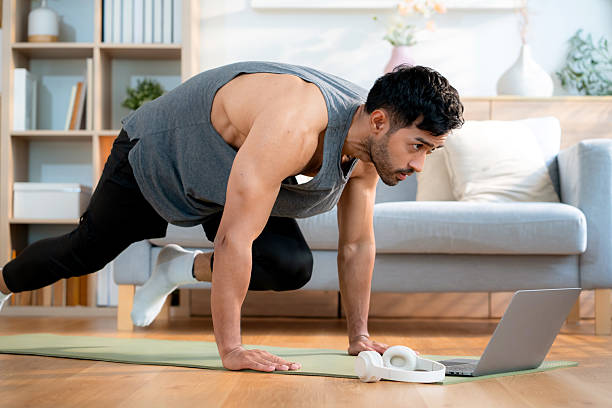
One obvious reason why people overcomplicate home training is that they fail to measure their actual physical footprint. When you are performing the vast majority of effective bodyweight or minimalist resistance exercises, you are either standing in one place or lying down on the floor.
Your training space requirement is actually very simple. It is exactly the size of a standard exercise mat, plus an extra arm's length of clearance on all four sides. A single mat sized space is enough to do hundreds of highly effective movements, including standard push-ups, bodyweight squats, lunges and core variations without moving a single inch outside your perimeter.
Multi Functional Gear vs Furniture Clutter
A major bottleneck that completely ruins the aesthetic of a premium apartment or villa is bringing in cheap, bulky fitness equipment that serves only one purpose. Buying a massive, single-use stationary bike or a cheap commercial treadmill takes up an immense amount of floor space and creates a messy, unorganized living environment. Within a few months, these giant machines typically stop being used for workouts and simply turn into highly expensive clothes horses.
High-performing individuals, to prevent this mess, buy a single pair of selectorized adjustable dumbbells that store neatly in a tiny corner. Instead of a bulky cable machine, they use heavy duty latex resistance bands and suspension straps that can be anchored to any standard doorway in seconds and packed away inside a drawer when the session is over. Choosing compact, high utility tools ensures your home remains a clean, relaxing sanctuary while giving you all the mechanical tension you need to force real muscular adaptation.
Outsourcing the Environmental Strategy
Many ambitious professionals try to guess their way through home programming, buying random gadgets online that promise big results but end up breaking or collecting dust. While scrolling through free online workouts seems cost-effective upfront, it presents a massive hidden bottleneck. Generic online videos don't know the exact dimensions of your living room, your specific joint restrictions, or how to scale an exercise when you run out of room, leading to a rapid loss of momentum and physical plateaus.
To shortcut this frustration and maximize every square inch of your property, partnering with a specialized personal fitness trainer at home is a highly practical play. Working with a dedicated, results-driven coach completely removes the spatial guesswork from your routine. A true professional doesn't need a commercial health club to get you results; they know exactly how to audit your specific floor plan and leverage your existing space safely. They can adapt complex strength progressions to a minimalist environment, ensuring you execute every movement with perfect form while keeping your home environment completely pristine.
Maximizing Vertical Space and Door Frames
When your horizontal floor space carries a heavy premium, your ultimate tactical move is to look upward. Many people completely ignore the massive amount of unused training space available on their walls and inside their standard door frames.
Utilizing high quality suspension trainers or removable door-frame pull-up bars allows you to execute advanced upper-body pulling movements without losing a single square inch of permanent floor real estate. These tools use your own body weight and you can increase or decrease the difficulty of a movement simply by changing your body angle. When you are done with the workout, you unhook the straps, slide the bar out of the frame and your living room is back to normal.
Keeping Home and Gym Separate
One major area where solo home lifters fail is the breakdown of their mental discipline. When you train in the same place where you watch television or work, your brain struggles to get the focus needed to do the workout.
Successful individuals keep their training zone entirely different during the session. You roll out your mat, clear away all work related clutter, turn off your standard room lights, and put on a focused training soundtrack. This deliberate sensory shift signals your nervous system that it is time to perform, giving you an instantly higher tolerance for physical intensity and keeping your consistency razor-sharp over the long term.
Conclusion
A massive, permanent commercial-style gym room is a luxury that is only necessary for hardcore powerlifters or bodybuilders who require multiple heavy iron racks and plate-loaded machines to survive. It requires an immense spatial footprint, but for the average busy professional, it is a massive waste of real estate capital. However, for individuals who want to maximize their daily energy and maintain a lean and athletic physique and work out in a highly efficient, private environment, a minimalist home setup is the clear winner. The exceptional time savings it grants and the zero commute friction it guarantees make a smart, mat sized training routine the ultimate lifestyle powerhouse for long term health.
Frequently Asked Questions
Yes, absolutely. A standard balcony is actually an ideal training zone because it provides excellent ventilation and natural light. If the floor surface is flat and you use a high density mat to protect the tiles, a balcony is enough for full body bodyweight or dumbbell circuits.
They can if your mechanics are sloppy. You should avoid heavy, unmitigated impacts. Try soft and controlled landings, or swap out high impact jumps for high velocity, low impact alternatives like fast bodyweight squats or kettlebell swings.
Yes. You can easily spike your heart rate and challenge your aerobic system using zero equipment anaerobic movements. Circuits that combine mountain climbers, burpees, high knees, and shadowboxing require zero physical travel across the floor but offer the exact same metabolic benefits as a commercial cardio machine.
